
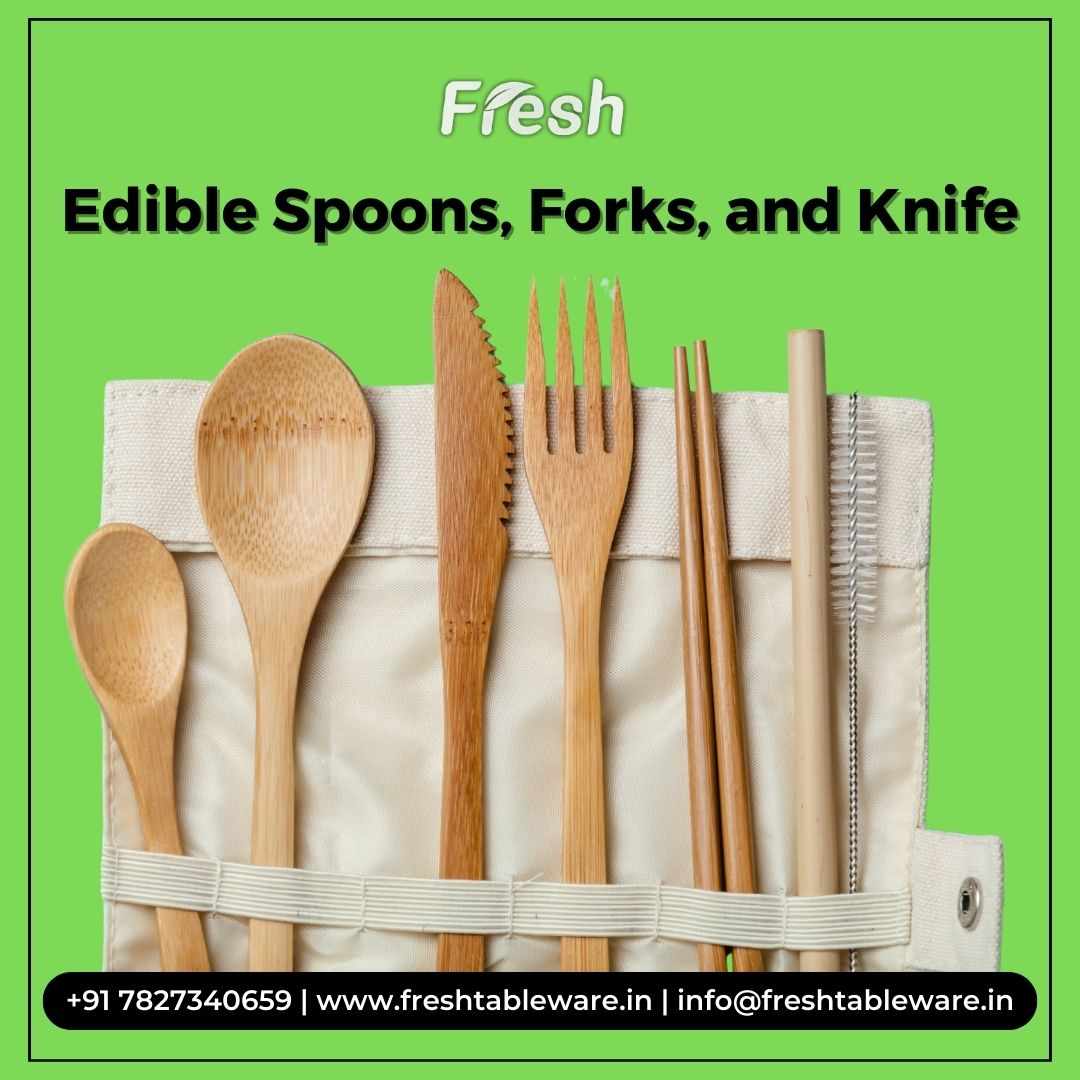
In a world increasingly focused on sustainability and environmental consciousness, edible cutlery emerges as a revolutionary solution to the pervasive issue of plastic waste. These innovative utensils offer a practical and eco-friendly alternative to traditional plastic cutlery, addressing the growing concerns about environmental pollution and resource depletion. Let's explore the various facets of edible utensils and its potential to transform our approach to disposable utensils.
1. Environmental Impact
Reduction of Plastic Waste:
Edible cutlery significantly reduces the reliance on single-use plastic utensils, which are notorious for their long decomposition periods and contribution to ocean pollution. By replacing plastic with biodegradable, edible options, we can mitigate the negative impact on landfills and marine ecosystems.
Sustainable Materials:
Edible cutlery is typically made from natural, biodegradable materials such as grains, pulses, and other plant-based ingredients. These materials decompose naturally without harming the environment, unlike traditional plastics that can take centuries to break down.
2. Health Benefits
Natural Ingredients:
Edible cutlery is crafted from food-grade ingredients that are safe for consumption. Common materials include rice, wheat, millet, and sorghum, which are not only edible but also nutritious.
Chemical-Free:
Unlike plastic cutlery, which may contain harmful chemicals like BPA and phthalates, edible cutlery is free from toxic substances, making it a healthier option for users.
3. Economic Advantages
Cost-Effective Production:
As the demand for sustainable products grows, the production of edible cutlery is becoming more cost-effective. The use of readily available agricultural by-products reduces manufacturing costs and promotes the utilization of otherwise discarded materials.
Market Demand:
With increasing consumer awareness of environmental issues, there is a growing market for sustainable products. Businesses that adopt edible cutlery can attract eco-conscious consumers and gain a competitive edge.
4. Versatility and Innovation
Variety of Flavors and Designs:
Edible cutlery comes in a range of flavors and designs, catering to different tastes and preferences. This variety not only enhances the dining experience but also allows for creative culinary applications.
Customizable Options:
Manufacturers can customize edible cutlery to meet specific requirements, such as adding nutrients, flavors, or branding elements. This versatility opens up numerous possibilities for innovation in the food and hospitality industries.
5. Consumer Appeal
Convenience and Novelty:
The concept of edible cutlery appeals to consumers due to its novelty and convenience. It offers a unique dining experience and eliminates the need for disposal, making it an attractive option for events, picnics, and everyday use.
Positive Brand Image:
Businesses that incorporate edible cutlery into their operations can enhance their brand image by demonstrating a commitment to sustainability. This positive perception can lead to increased customer loyalty and brand advocacy.
6. Challenges and Future Outlook
Production and Scalability:
While the production of edible cutlery is growing, scalability remains a challenge. Ensuring consistent quality, taste, and durability while expanding production capabilities is crucial for widespread adoption.
Consumer Education:
Educating consumers about the benefits and proper use of edible cutlery is essential for its acceptance. Awareness campaigns and partnerships with environmental organizations can help promote its advantages and encourage behavioral change.
Conclusion
Edible cutlery represents a powerful tool in the fight against plastic pollution, offering an eco-friendly, health-conscious, and economically viable alternative to traditional disposable utensils. As technology and consumer demand evolve, edible cutlery has the potential to become a mainstream solution, significantly reducing our environmental footprint and paving the way for a more sustainable future. Embracing this innovative approach can lead to a cleaner planet and a healthier lifestyle for generations to come.

Write a comment ...